
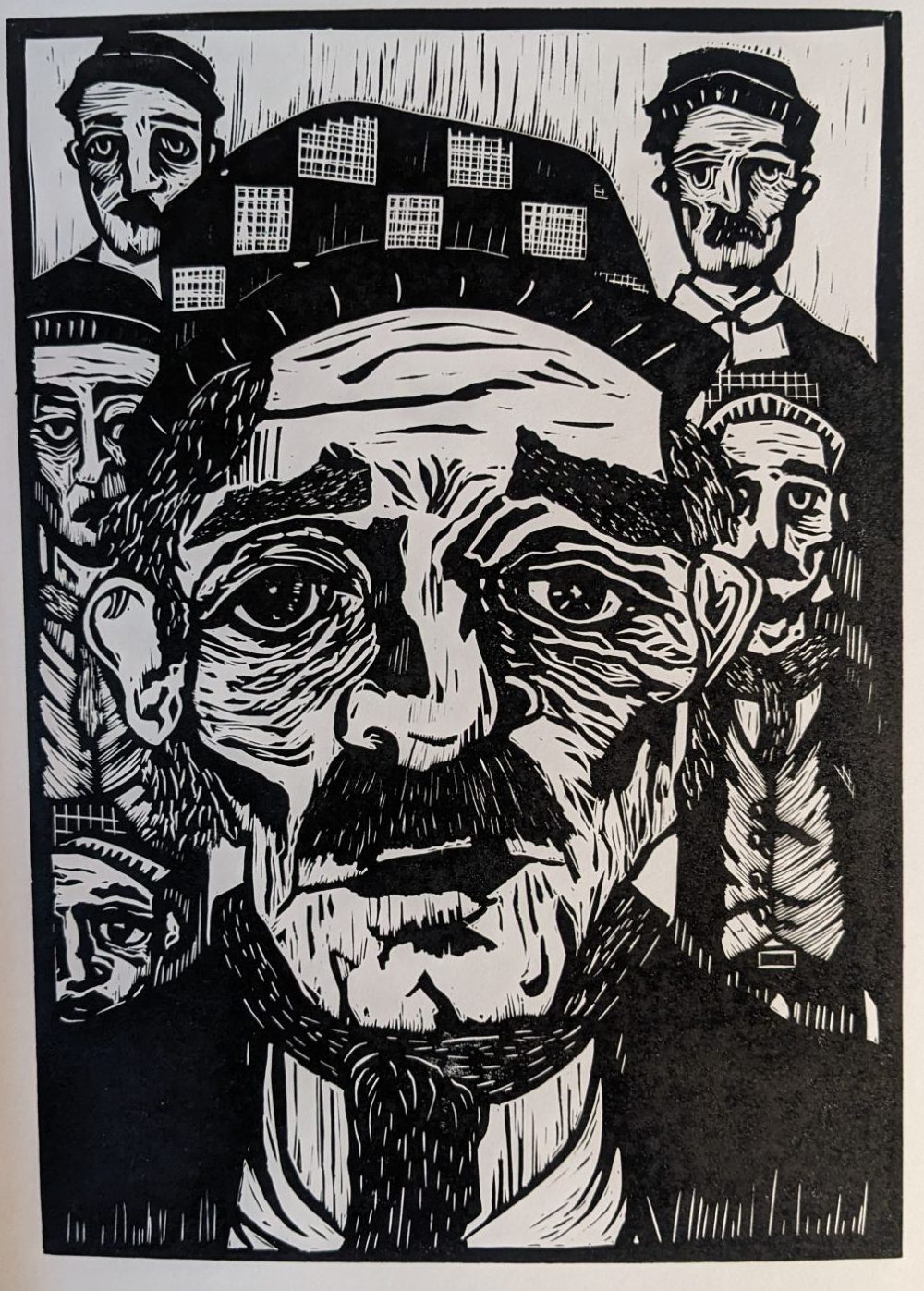

Cefn Boyos A4 Hand-Printed Lino Cut on A3 Paper Limited Edition of 30
Cefn Boyos is a hand-pulled lino print capturing the quiet strength and stark beauty of South Wales’ industrial past. Printed in bold black ink on crisp A3 paper, the A4-sized image is surrounded by clean white space.
This is a limited edition original (1 of 30), signed and numbered by Daniel Thorne. Each print is individually inked and pressed by hand, making every piece unique with its own subtle variations.

“Cefn Boyos” are the imagined ghosts of half forgotten retold stories of the old characters in the village. Marching up and down. On their way to work. On their way home. To the pub and back again.
These aren’t specific portraits; they are made-up faces of people I’ve never met, but whose presence is still felt. They are the ghosts of the village. Strangers, yet familiar. You find them in the stories told and the shared memory of these streets.
I’m drawn to the concept of these workers coming home, perhaps from the mines, the factories and works, or perhaps the pub. A fragmented reflection of daily life.
My family moved to South Wales, and Merthyr Tydfil in particular, during the Industrial Revolution, and these portraits are a response to that heritage.
I reflect mostly on the Industrial Revolution because I feel a strong connection. It allows me to hold up a mirror to the modern world and it’s the reason so much of my family moved to South Wales from all over. Having grown up and lived in the same village as them, you hear stories and tales that build a sort of collective memory.
Lately I’ve been reminiscing as I’ve been out walking (I often get lost in my head), thinking about who else has walked these streets before. Living in an old cottage, you know you’re not the first to have called it home, and you won’t be the last.

Beyond the initial concept and a rough sketch the piece isn’t planned out much more than that. This allows for more fluid movement and the ability to adapt to the material as the face emerges, almost like a moving picture until it’s finalised.
Moving from pen and pencil to the gouge adds its own weight and texture. The medium itself forces a shift; the image changes ever so slightly in a new, natural way.

I’ve really enjoyed leaning into the flow of this piece. Stripped of the marker I used to sense check throughout, you can see some of my initial sketching with pen still shows where I originally planned pieces before giving into the motion of the process and going another direction. The overall structure remained from my dash at the block one afternoon with a Sharpie and the nuances that came naturally from the cutting and impulsive changes.

In relief printing, there is no undoing. As each cut cannot be taken back, the final piece becomes its own entity. The little “mistakes” of the hand give way to purposeful cuts that define the character.

As I get closer to the end of the carving, I feel the piece finally starting to settle. It’s a point where the characters and their surroundings begin to hold their own space on the block.
The faces of these old boys are starting to come through on their own now. Focusing on that collective memory, I’m drawn to the imagining of them. On the long trek home from the shift, or the pub. Or both. (Sounds familiar).
Hwyl Fawr,
Daniel
Leave a Reply