Friday 14th November 2025 was a day I’ll never forget.
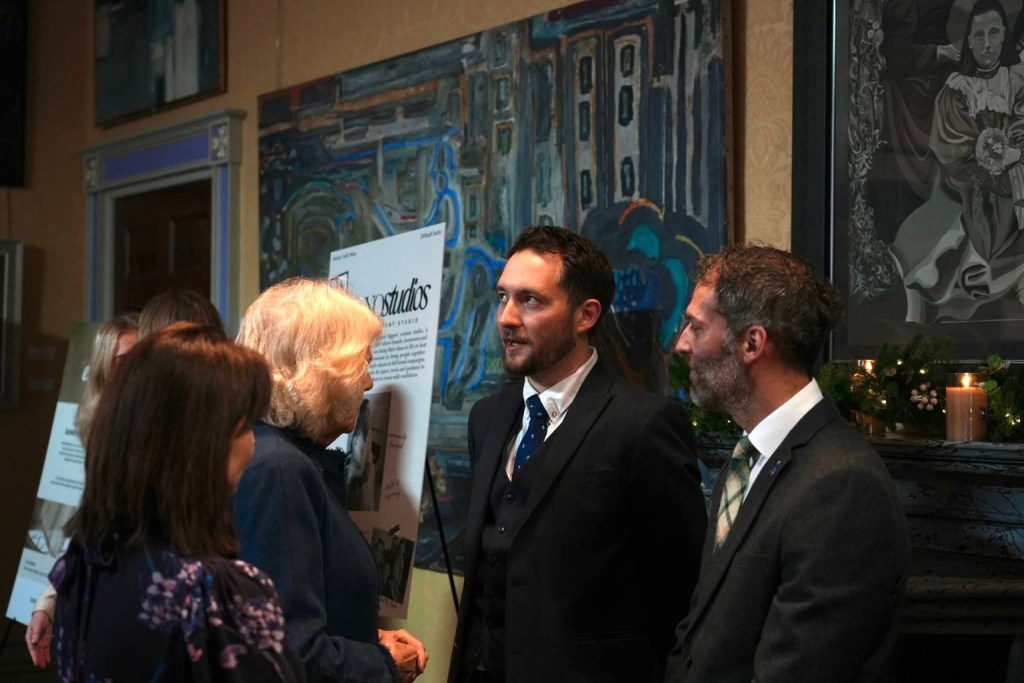
I was presented to Their Majesties King Charles III and Queen Camilla during their visit to Cyfarthfa Castle for the bicentennial anniversary and the King’s Birthday celebrations. The presentation was for my linocut print “Iron Worker,” which won Best Print at the Cyfarthfa: Juxtaposed 2025 exhibition and now hangs permanently in the castle.
The fact that I was selected to be presented to the King and Queen still feels surreal. This kind of recognition doesn’t happen every day, it speaks to the significance of the work and the trust placed in it to represent Welsh art and culture at the highest level. It’s an enormous privilege and responsibility.
It’s difficult to put into words what this moment means to me. Not just as recognition of the work itself, but because of where it happened and what the work represents.
The Print: Iron Worker
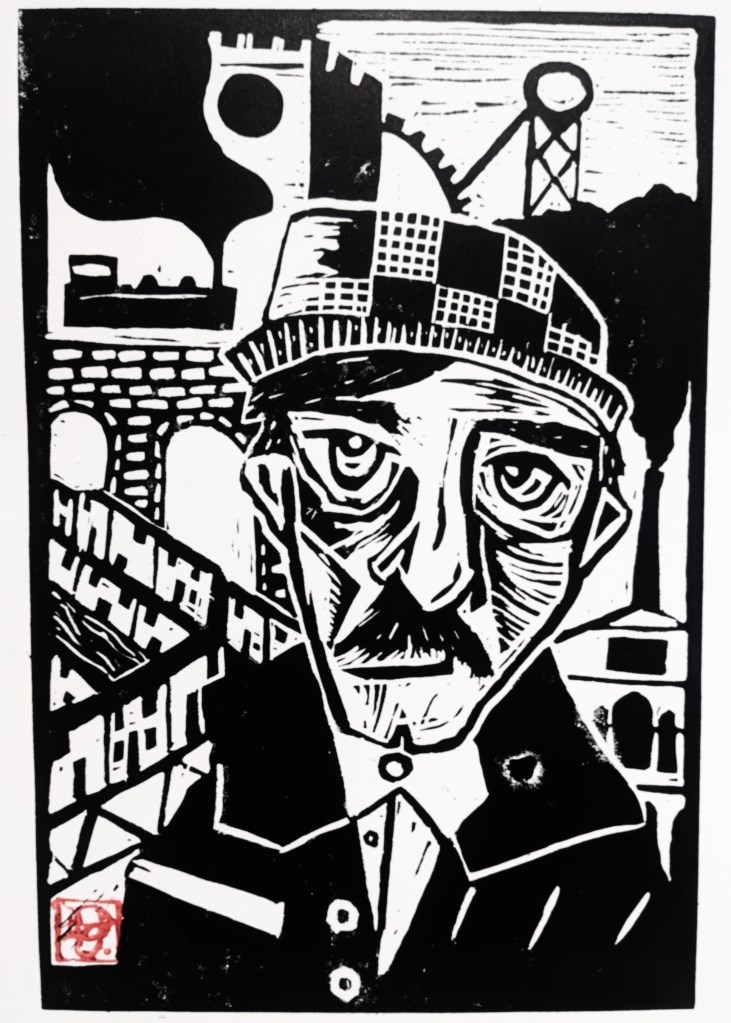
“Iron Worker” depicts a solitary figure, drawn from a blend of historical images and imagination, representing the countless workers who powered Merthyr’s industrial revolution. The figure stands surrounded by the architectural remnants that defined working-class life in the town.
The composition incorporates local landmarks: the Cefn Coed viaduct soaring overhead, the skeletal remains of the world’s oldest surviving iron railway bridge, rows of terraced housing, chapels that offered spiritual refuge, and the Pandy Clock, rumored to have one face left blank “so that the riff-raff couldn’t see the time.”
That detail about the clock has always struck me as particularly telling. It’s a small thing, but it speaks volumes about the class contempt that underpinned the entire system. Even something as simple as knowing the time was considered too good for working people.
The print is an unflinching acknowledgment of that contempt and the human cost behind Merthyr’s industrial dominance. It’s not a romantic vision of heritage — it’s an honest reckoning with what actually happened and who paid the price.
Closing the Circle
Standing in Cyfarthfa Castle on Friday, being presented to Their Majesties for work that centers working-class history in a space historically defined by class division, felt like closing a circle.
The castle was built by the Crawshay family, the ironmasters who amassed their wealth from Merthyr’s position as the iron capital of the world. By the 1820s, Merthyr was producing 40% of Britain’s iron. While the Crawshays lived in palatial luxury, the workers who made their fortune possible endured conditions described as “hell on earth.” The contrast between the castle on the hill and the industrial valleys below couldn’t have been starker.
The ironmasters are long gone. The castle is now a museum and gallery, open to everyone, filled with art and artifacts that tell the full story of Merthyr, not just the story of wealth and power, but of the people who created that wealth with their hands and their lives.
That “Iron Worker” is part of that story now, hanging in those walls, being deemed worthy of presentation to the Crown, means everything to me.
These are the stories that shaped me. They’re the stories I believe deserve to be told, not romanticized, not forgotten, but honored with clarity and honesty. They’re part of who we are as Welsh people, and they matter.
To have that work recognized at the highest level — to have it selected as representative of Welsh cultural heritage — is validation that these difficult, honest stories need to be heard and preserved.
Hwyl fawr,
Daniel
 Daniel Thorne
Leave a comment