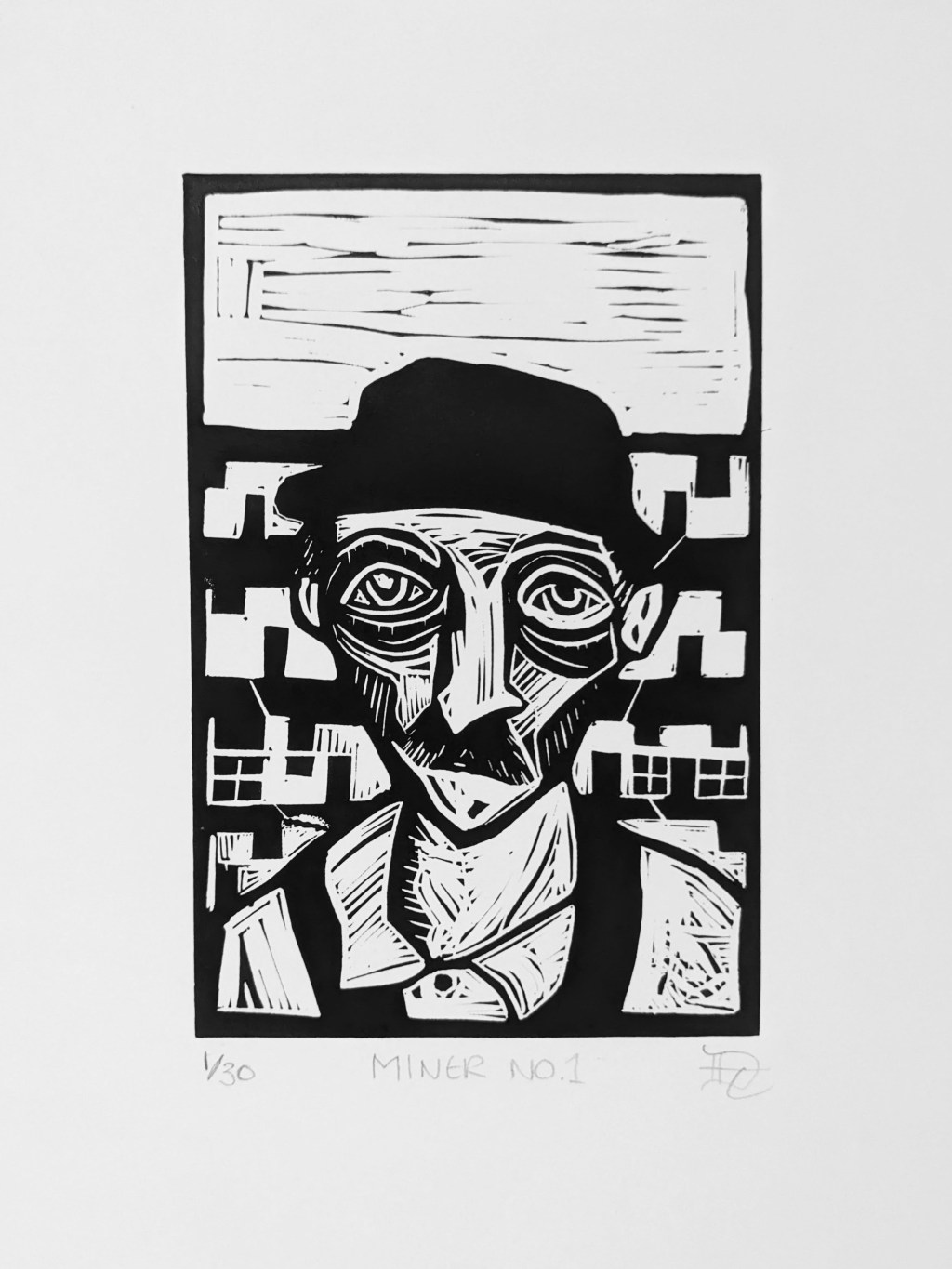
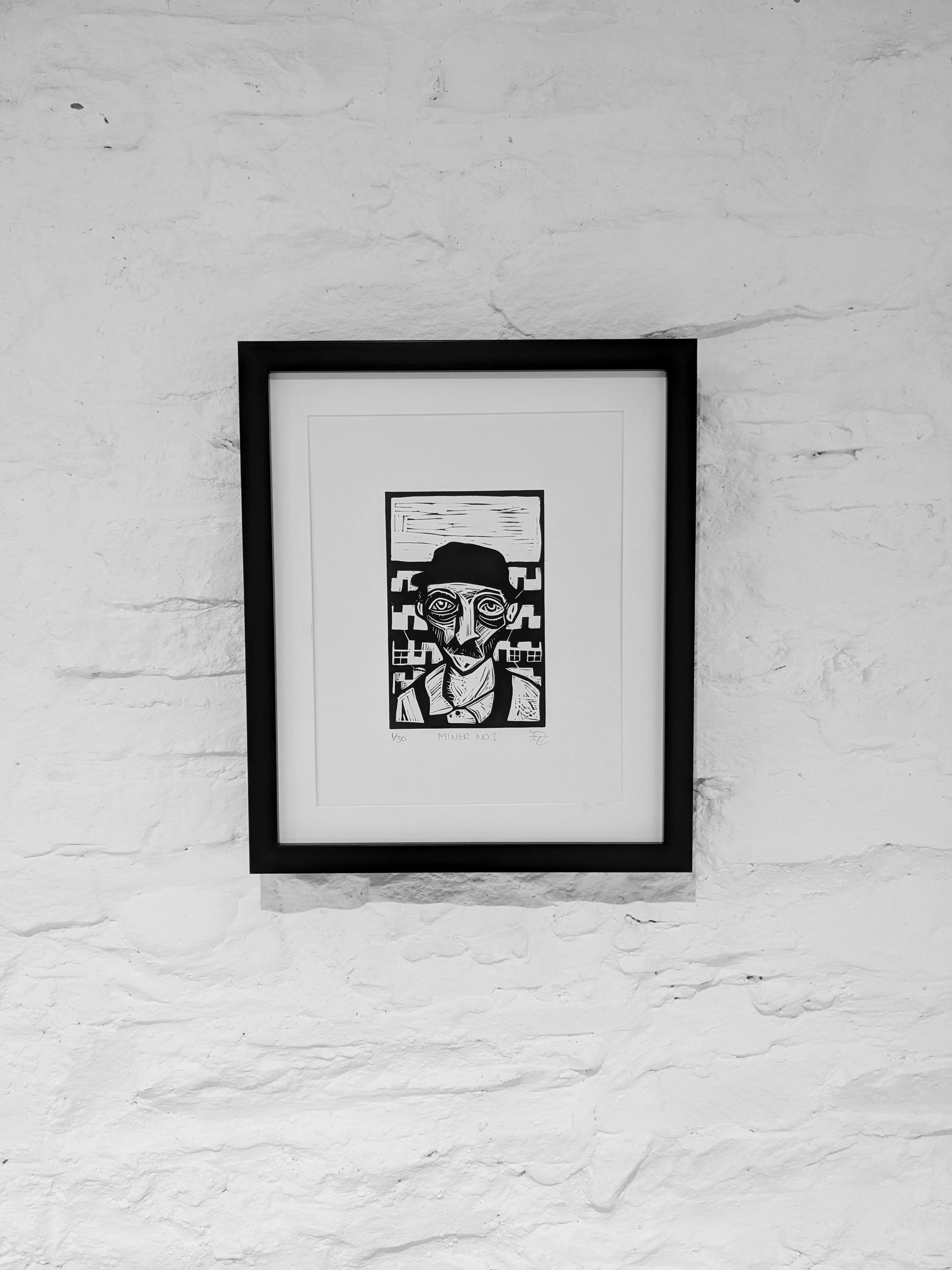
Miner No.1 marks the beginning of something I’ve been circling around for months — a series of individual portraits drawn from the same periods in time that gave us the Tonypandy Riots and the iron furnaces of Merthyr Tydfil.
During the late 19th and early 20th centuries, South Wales saw rapid industrialisation that transformed quiet farming communities into dense industrial towns. The coalfields attracted thousands of workers, reshaping the valleys with endless terraces and tightly bound lives.
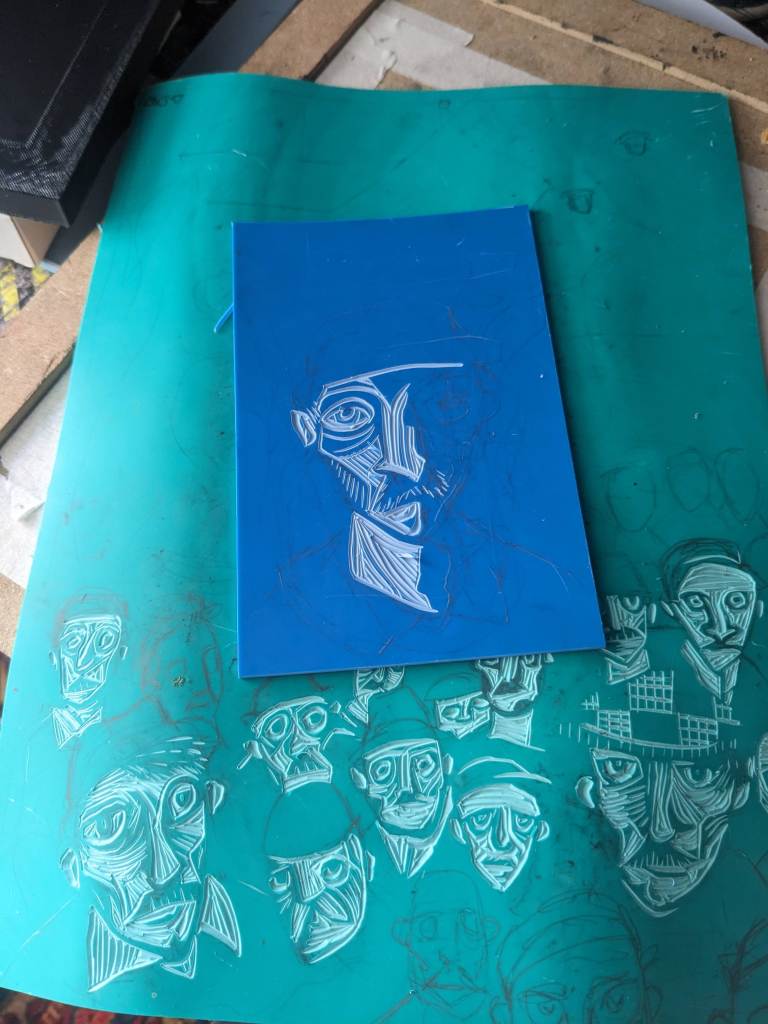
While carving the many faces in the crowd for Tonypandy Riots, I kept finding myself drawn back to the individuals within that mass of people. Each face carried its own story, its own weight of experience. So I took a break from carving those many faces — and carved another face. A singular figure. A bit of focus. A way to explore character and presence without the noise of the masses.
The Individual and the Community
This piece came from thinking about those individuals — what life might have been like for them in the rows of terraced houses that still define the valleys today. It’s a way of trying to understand where I came from, from the people who came before in the place I was born. Without the mass migration into these valleys during the industrial boom, most of South Wales would still be scattered farms and quiet villages, as they had been for centuries.
Instead, we have these dense, proud communities — born from coal and iron, and still shaped by their industrial past.
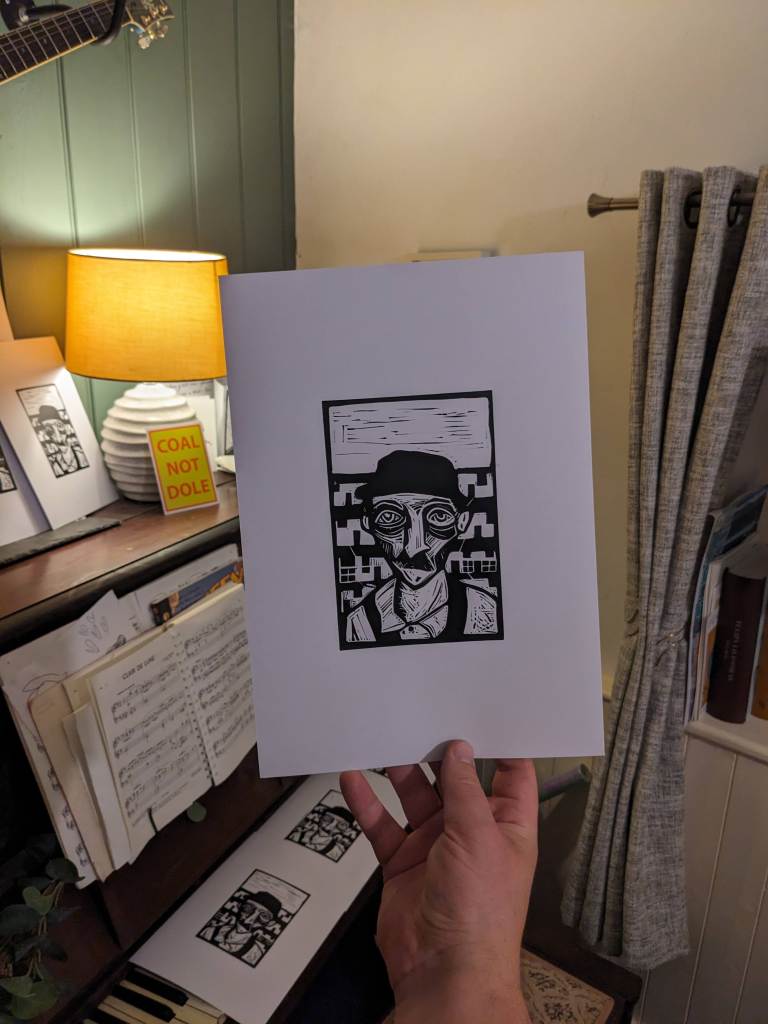
I found myself revisiting the rows of terraced houses from previous prints, recarving them into this work as a kind of backdrop. These homes, built tight and endless, weren’t just shelter. They were the architecture of a new way of life, housing the workers who descended into the earth each day.
The Print
Miner No.1 focuses on a single figure — weathered, enduring — surrounded by terraced houses that would have housed him. The terraced houses rise behind him like a geometric landscape.

Like Iron Worker, this isn’t about heroic mythology. It’s about showing people as they often were — shaped by the systems they served, carrying dignity in their struggle rather than glory in their labour.
The Series
This is the start of a smaller series of individuals, miners and their community. Each portrait will stand alone but contribute to a larger understanding of what it meant to live and work in the South Wales industrial valleys. They’re the faces that made up the workers who built their lives around the rhythms of pits and factories.
These aren’t historical figures with names and dates. They’re composites drawn from history books, memories, and imagination.
Hwyl fawr/Goodbye,
Dan
 Daniel Thorne
Leave a comment